Precious heritage that must be protected for future generations Living Taonga
Te Āpiti’s forests, wetlands and river valleys provide a home for an abundance of native plants and animals. From the birdsong echoing through the canopy to the unique plant communities growing on the forest floor, these living taonga are part of this landscape and its story.
There’s an ongoing effort to protect them for future generations. Across Te Āpiti, conservation programmes help safeguard native species by restoring habitats and controlling introduced pests.
You can learn more about the birds and plants via interpretive signs along the walking tracks or by using apps like iNaturalist and Aotearoa Species Classifier
Birds of Te Āpiti
The forests of Te Āpiti provide important habitat for a range of native bird species. Keep an eye out for kererū (New Zealand wood pigeon) moving through the canopy, listen for the distinctive calls of titipounamu (riflemen), and watch the skies for the kārearea, New Zealand's only native falcon.
Many of these birds rely on healthy forests and safe nesting sites to survive. Ongoing conservation efforts help protect their habitat and reduce the impact of introduced predators, creating the conditions needed for native bird populations to thrive. Looking ahead, plans are underway to reintroduce toutouwai (North Island robin) to Te Āpiti, bringing another treasured native species back to the forest.
Te Āpiti was once home to moa and huia (now extinct)
See how many of these birds you can spot on your visit
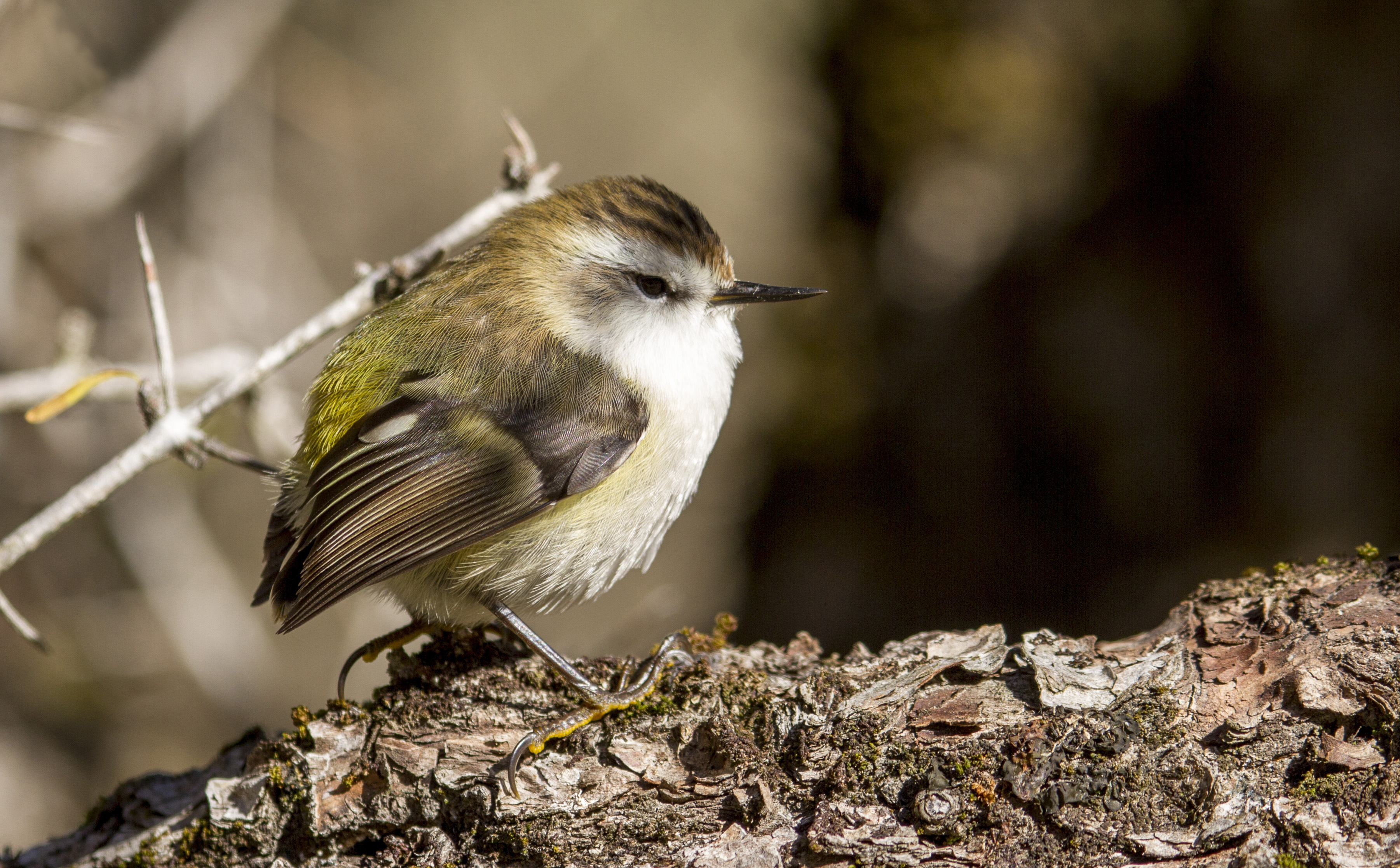
Tītipounamu (rifleman)
Tītipounamu (Rifleman) is New Zealand’s smallest bird, weighing only about 6 grams. It is a tiny forest insect-eater that is almost constantly on the move through the trees.
It is one of only two surviving members of the ancient New Zealand wren family, making it a living link to some of our oldest native bird lineages.
Riflemen flick their wings rapidly as they forage, creeping along trunks and branches in search of insects in the bark and foliage. Their constant movement makes them more often heard and glimpsed than closely observed.
Look for fast, darting movement in the forest canopy and listen for high, quick calls, especially in summer evenings.
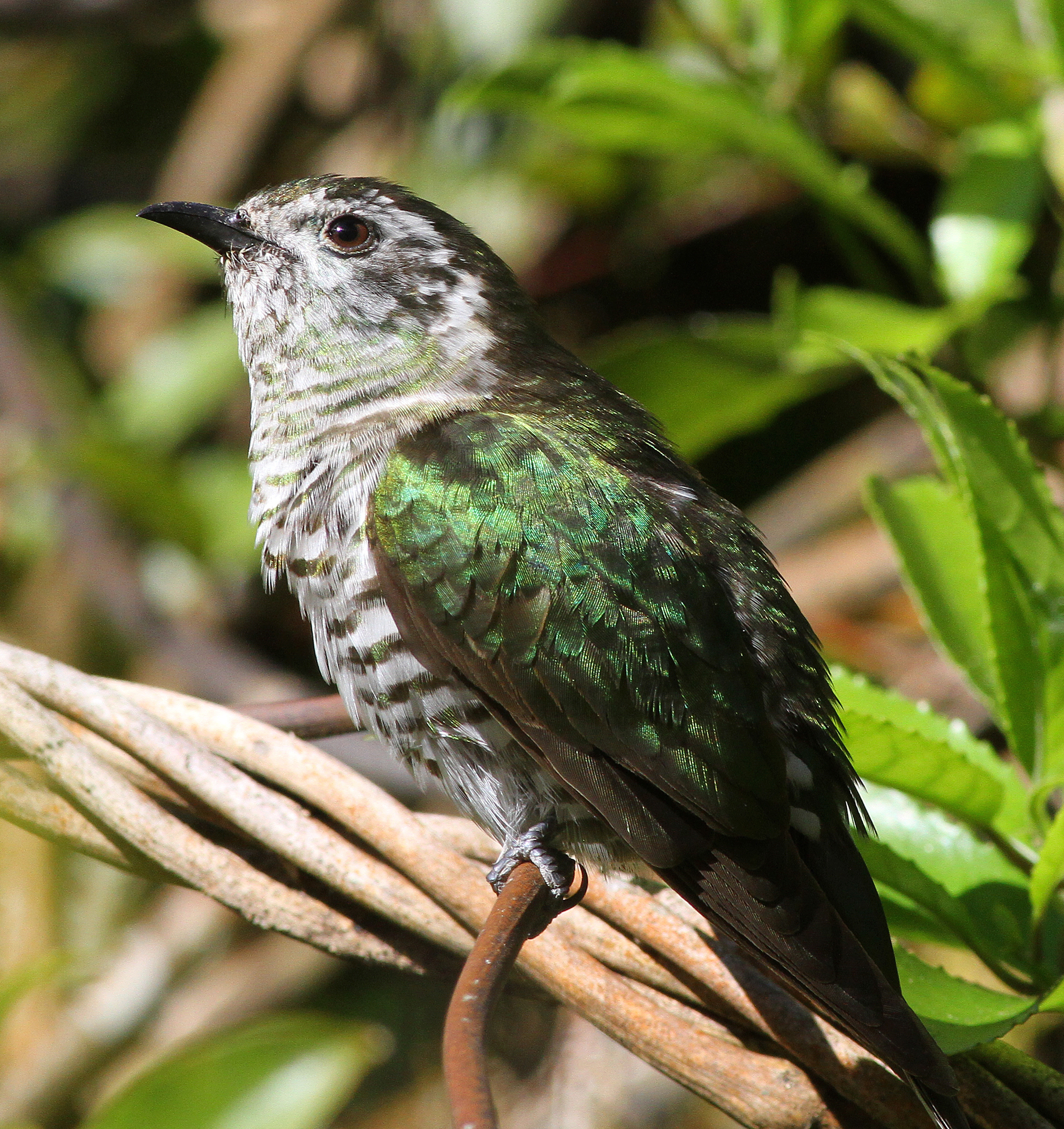
Pīpīwharauroa (Shining Cukoo)
Shining cuckoo (Pīpīwhaurauoa) is a small summer migrant to New Zealand, arriving in spring and leaving again in autumn to spend the winter in the Solomon Islands and the Bismarck Archipelago.
Although common across the country, it is well camouflaged and more often heard than seen. Its distinctive rising, whistling call is one of the classic sounds of spring in New Zealand forests.
Shining cuckoos are brood parasites. They lay their eggs in the nests of small native birds, especially grey warbler on the mainland. The foster parents then raise the chick as their own.
The young cuckoo grows quickly and relies entirely on its host parents until it becomes independent.
Shining cuckoos feed mainly on insects and are one of the few native birds able to eat toxic or hairy caterpillars that many other species avoid.
Look and listen for its bright, rising whistle in spring and early summer, especially in forest edges and well-vegetated areas.
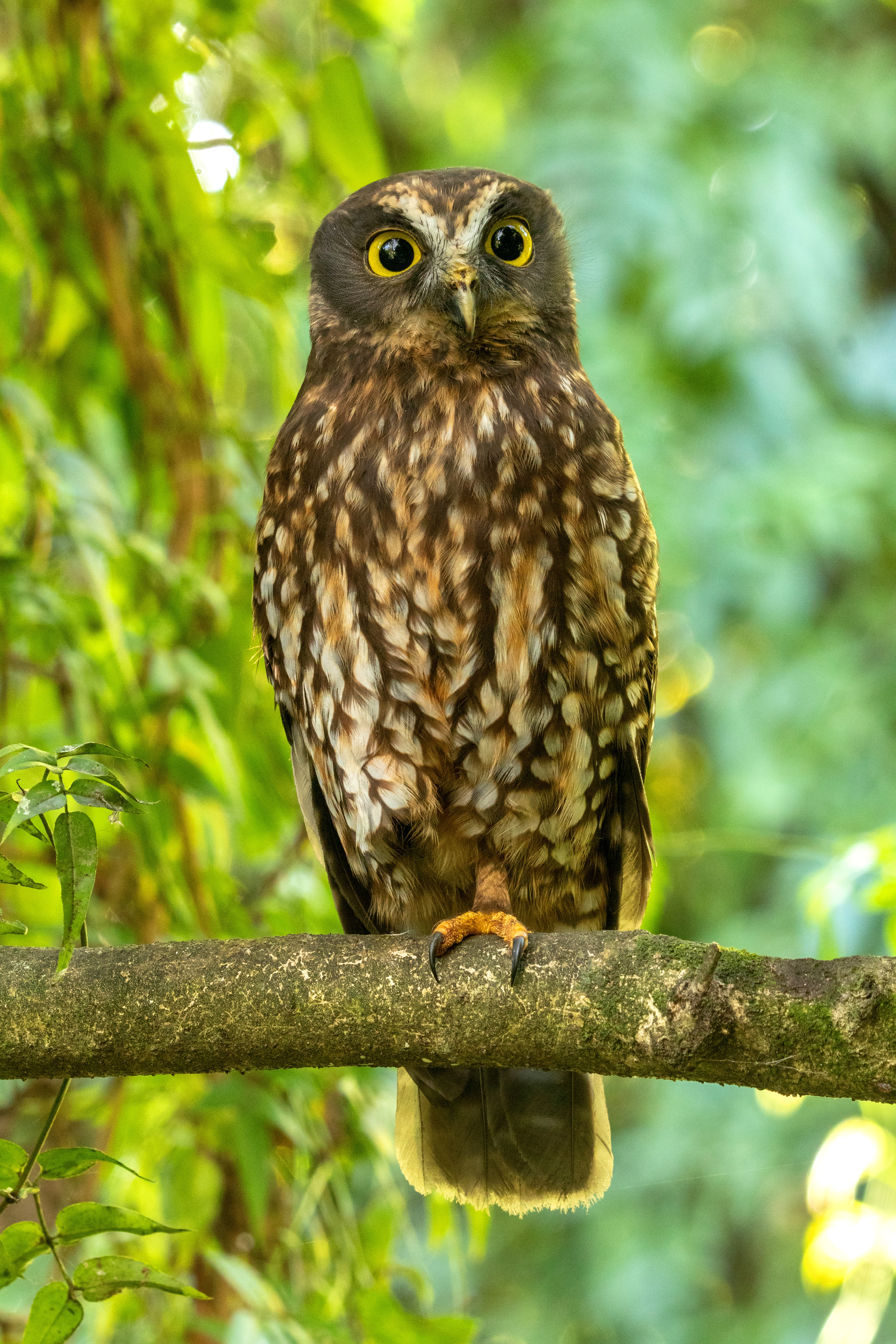
Ruru (morepork)
Ruru (Morepork) is a small, dark brown, nocturnal owl found throughout much of New Zealand in native and plantation forests, as well as many bushy urban parks.
It is best known for its distinctive “more-pork” call, which is commonly heard at night and is one of the most familiar sounds of the New Zealand forest.
Ruru hunt at night, feeding on insects, small mammals, and birds. Their short, broad wings make them highly manoeuvrable in dense forest, and special feather edges allow for near-silent flight.
Look and listen for its haunting call after dark, especially in areas with mature trees and good cover.
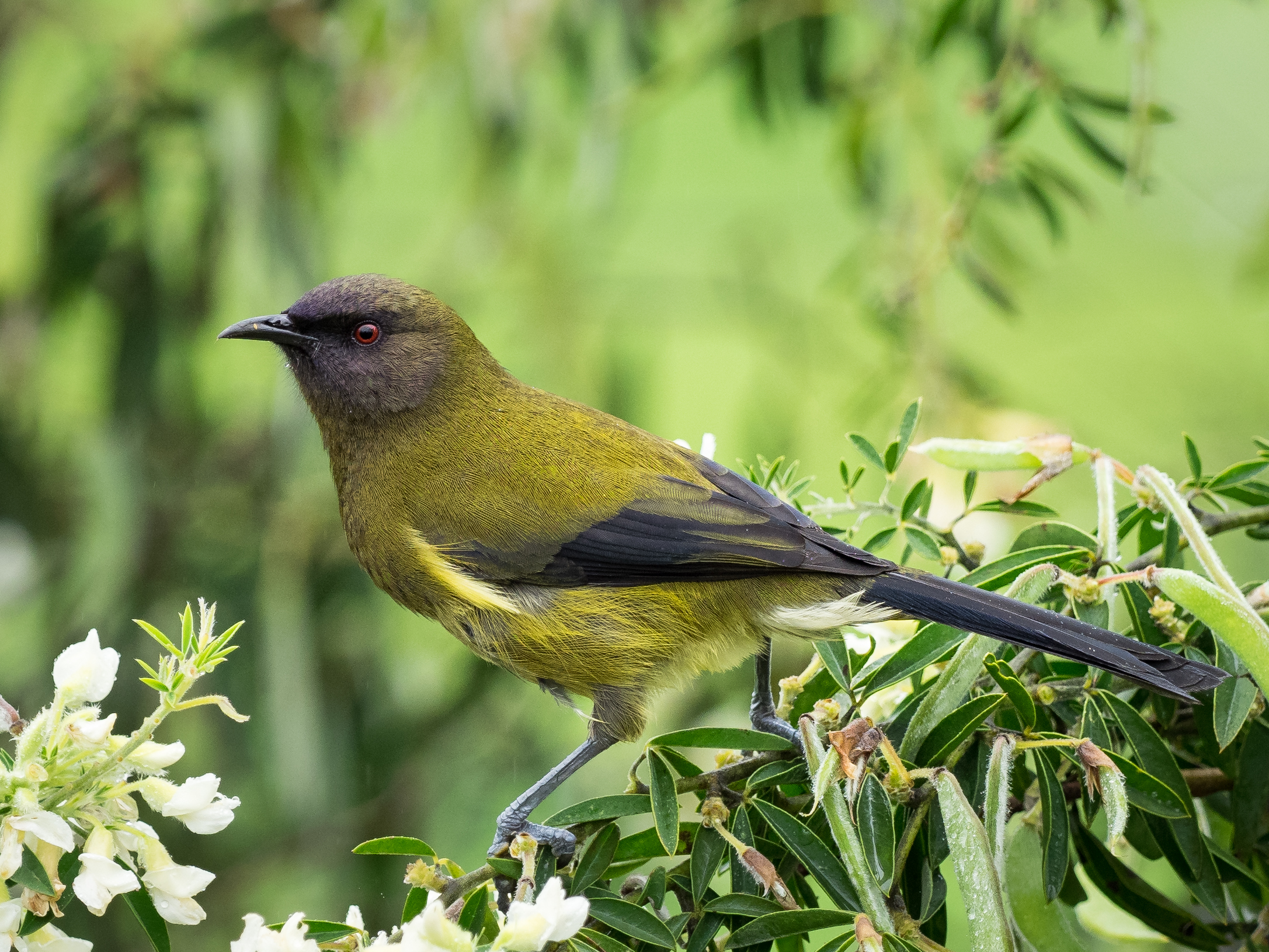
Korimako (Bellbird)
Korimako (Bellbird) is a native honeyeater found across much of the central and lower North Island, including the Manawatū, though it becomes rarer further north.
It belongs to the same nectar-feeding family as tui and has a short, down-curved bill and a brush-tipped tongue adapted for feeding on nectar.
Males are olive-green with a subtle purplish sheen on the head, while females are browner with a pale stripe near the face. Both can appear dusted with pollen after feeding, sometimes giving their faces a blue or orange tint depending on the flowers visited.
Korimako are best known for their clear, bell-like song, which is often described as softer and purer than the more complex calls of the tui.
They feed on nectar, fruit, and insects, and play an important role in pollinating native plants such as kōwhai, tree fuchsia, and mistletoe, as well as dispersing seeds through the forest.
Look and listen for their melodic calls in forest canopy and edges, especially in spring and summer.
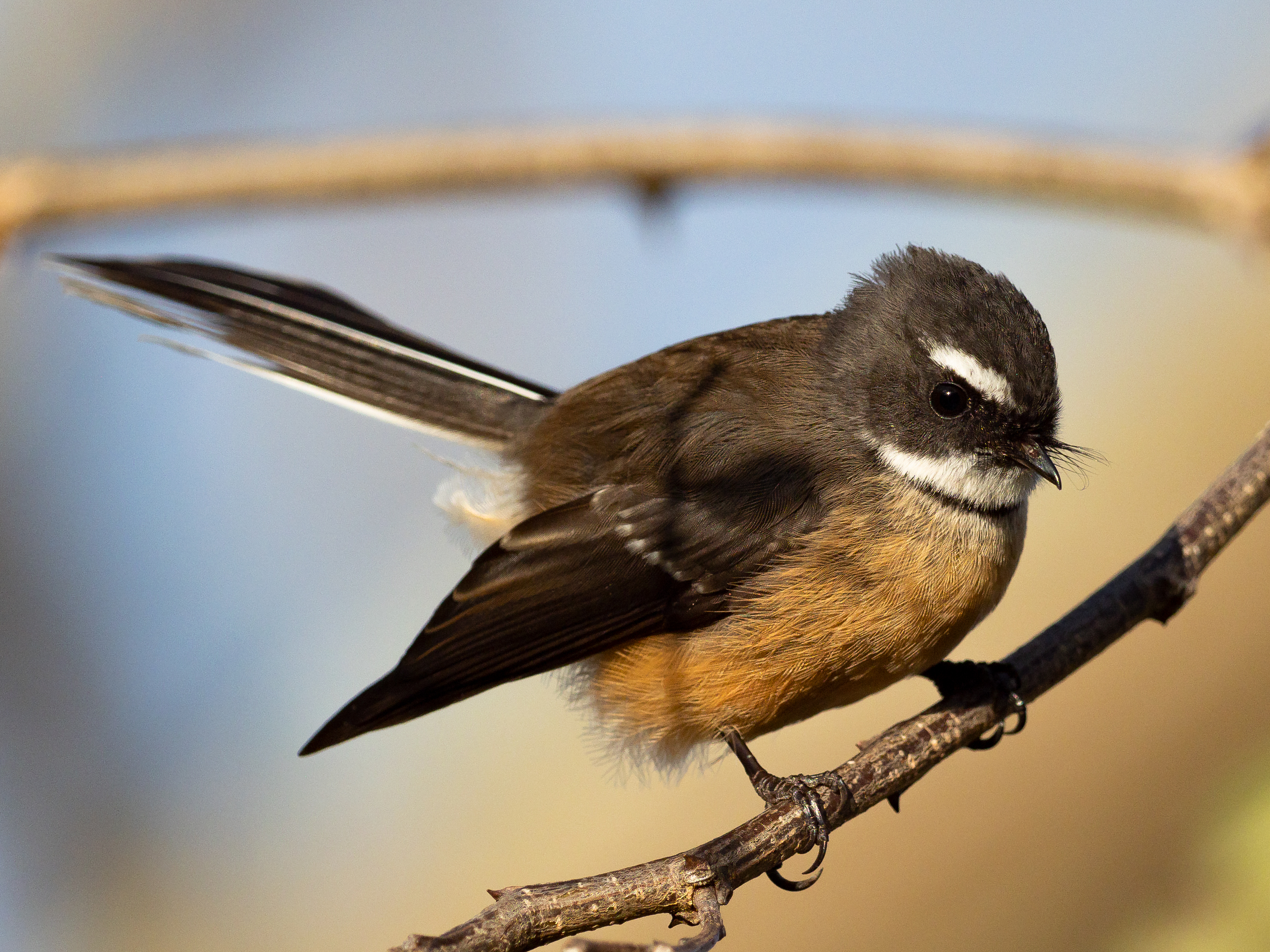
Pīwakawaka (NZ Fantail)
Pīwakawaka (Fantail) is one of New Zealand’s most familiar native birds, known for its distinctive fanned tail and its curious, friendly habit of often approaching people closely in the forest.
There are two colour forms. The pied form is found throughout New Zealand, while a rare black morph occurs mainly in the South Island and only occasionally in the North Island.
Pīwakawaka are tiny birds, weighing up to 8 grams. Their small size makes them sensitive to cold, and they sometimes gather in groups to stay warm.
They are constantly active, flitting quickly from branch to branch as they hunt small insects such as flies, moths, beetles, and spiders, occasionally also taking small fruit.
Breeding pairs build cup-shaped nests together and share incubation and feeding duties. During the breeding season they become highly territorial, chasing away intruders with sharp chattering calls.
Look for their rapid, darting flight and constantly fanned tail as they weave through forest edges, tracks, and open bush.
Riroriro (Grey warbler)
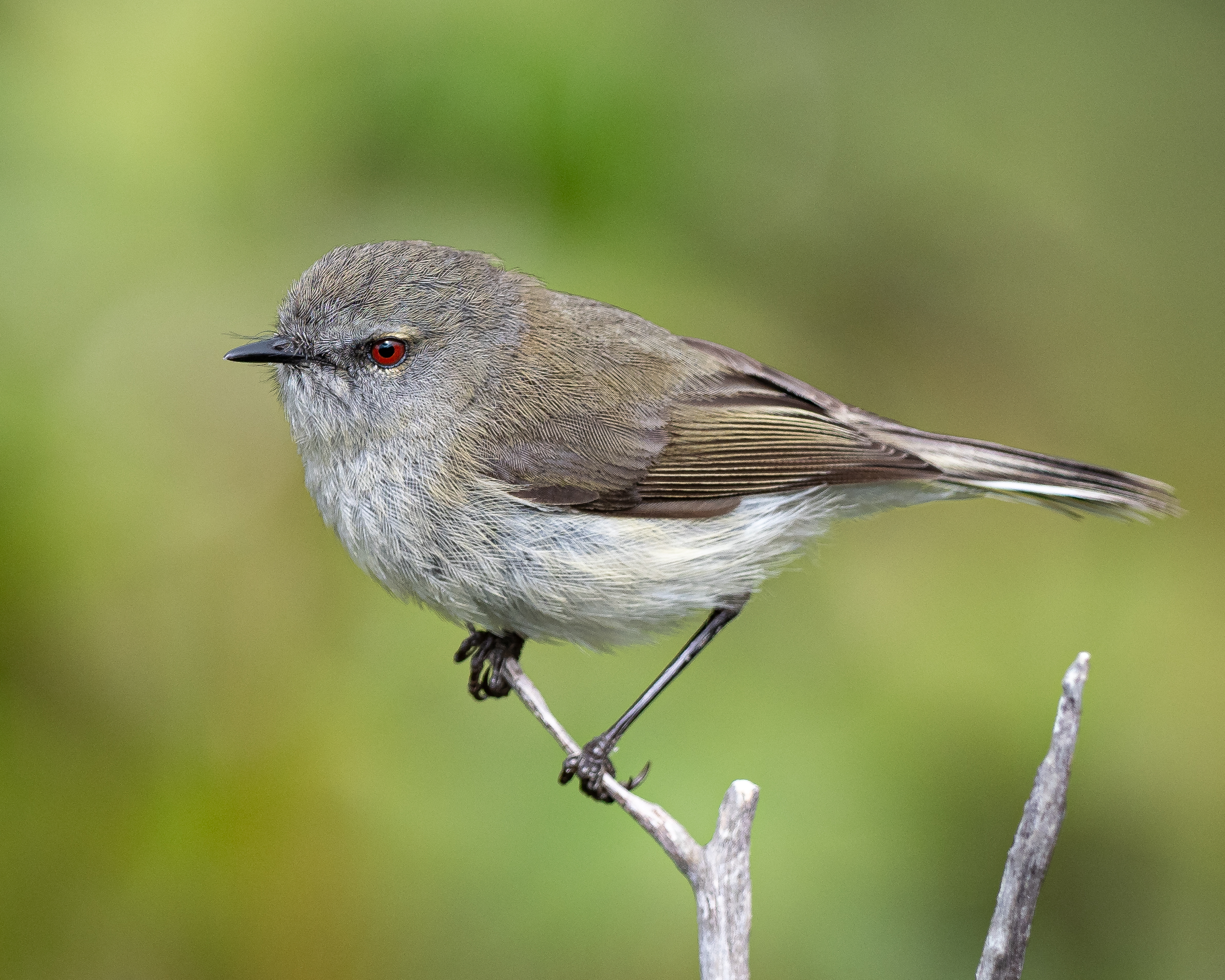
Riroriro (Grey Warbler) is a tiny endemic forest bird, more often heard than seen. It has a loud, distinctive trilling song, and is one of the most recognisable sounds in New Zealand bush.
Males are the primary singers, while females give shorter chirp calls.
Riroriro are among New Zealand’s smallest birds, weighing about 6 grams, and are closely matched in size by the titipounamu. They are slightly larger overall, with a longer tail.
They have olive-grey upperparts, pale grey underparts, and striking red eyes. They spend most of their time in dense vegetation but often forage actively along outer leaves and branches, sometimes hovering briefly in mid-air to pick insects — a behaviour that helps identify them in the field.
Their nest is a finely woven, enclosed dome suspended in outer branches, where they typically raise 3–5 chicks.
Riroriro are also the sole host for the brood parasite shining cuckoo on mainland New Zealand. The cuckoo lays a single egg in the warbler’s nest, and the chick is raised entirely by its foster parents.
Look and listen for their high, rippling song in dense forest and scrub, especially in spring and summer.
Kārearea (NZ Falcon)
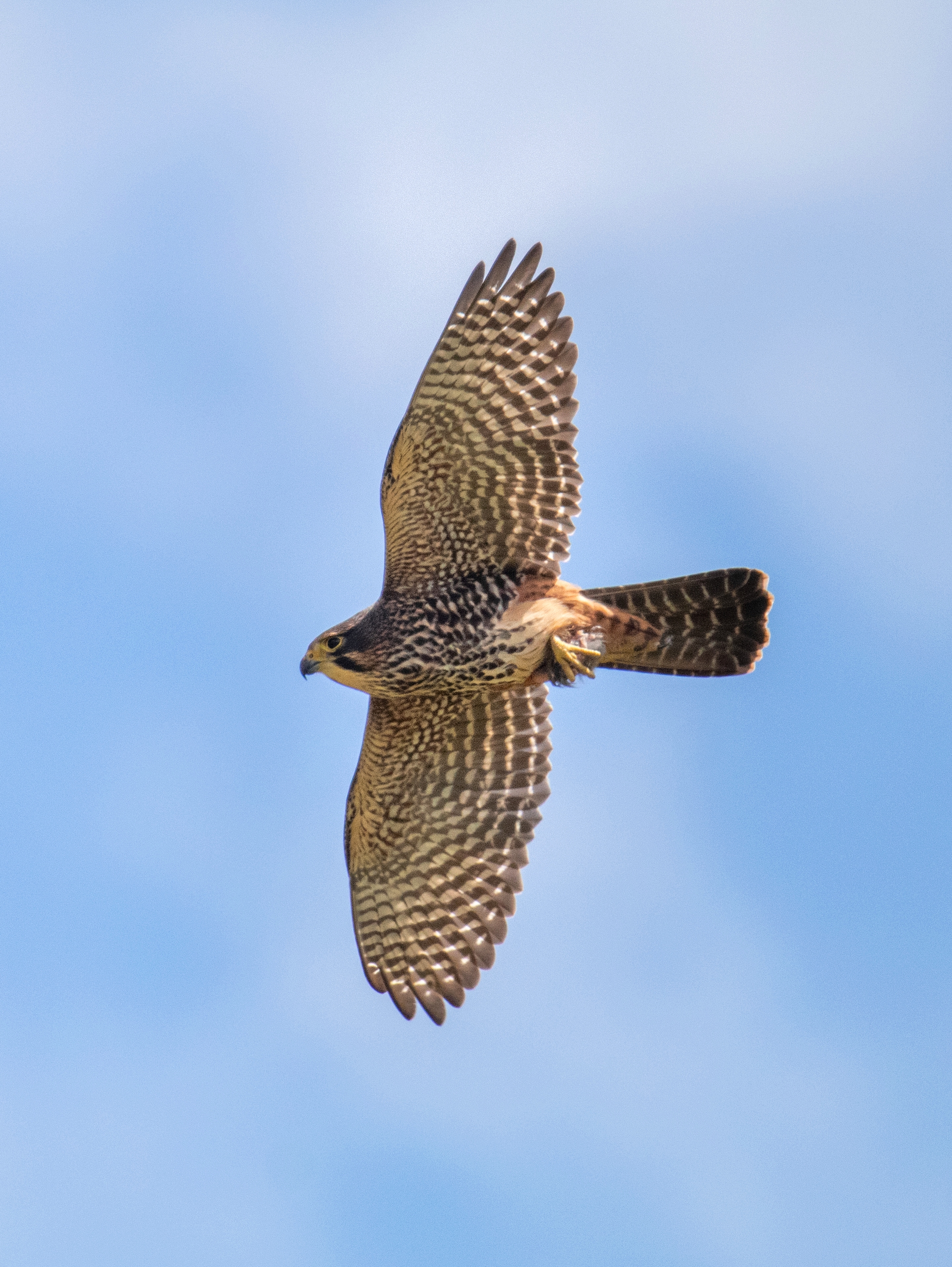
Kārearea (New Zealand Falcon) is an endemic raptor and one of 38 falcon species worldwide. It is found across mainland New Zealand and on several offshore islands, including the Auckland Islands.
It is New Zealand’s fastest bird, capable of reaching speeds of over 100 km/h in flight. Its sharp, repeated “kek-kek-kek” call is often heard over forested areas such as Te Āpiti.
Kārearea are powerful hunters, typically preying on other birds. They hunt by watching from a perch before launching fast, direct attacks, using their strong talons to seize prey and a powerful bite to dispatch it. They are also agile contour fliers and can take prey in mid-air or close to the ground.
Unlike many birds, kārearea do not build nests. Instead, they lay eggs in a simple scrape on the ground, under rocks, vegetation, or occasionally in tree cavities. Ground-nesting birds may defend their nests aggressively, including swooping at intruders.
Females are significantly larger than males, a common trait in raptors.
Look for fast, direct flight and sharp calls overhead, especially near forest edges and open clearings.
Kererū (NZ pigeon)
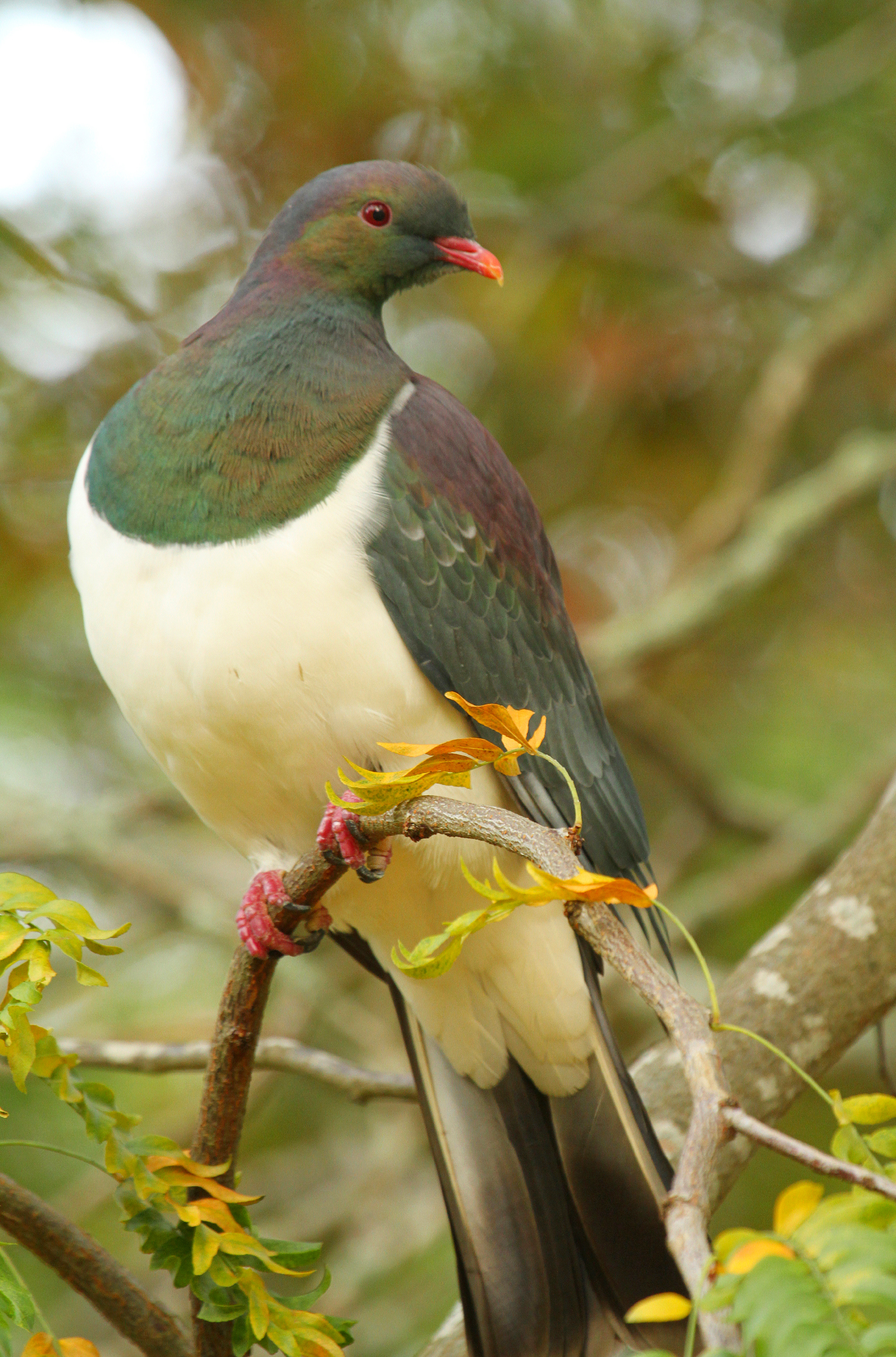
Kererū (New Zealand Pigeon) is endemic to mainland New Zealand, with its closest relative, the parea, found on the Chatham Islands. It is a large forest pigeon, growing up to 50 cm long and weighing up to 630 g.
Common in Te Āpiti Manawatū Gorge, kererū are often overlooked because they are mostly silent, apart from soft “ooo” calls. However, their flight is very distinctive, with a loud, heavy wingbeat that makes them easy to recognise once heard.
Kererū are the only remaining native bird in the gorge capable of swallowing large fruit whole, making them a vital seed disperser for forest trees such as tawa.
Fruit is their main food source, but they also browse leaves and buds, particularly nitrogen-rich foliage during breeding. They may also feed on the ground in open areas where conditions are safe.
Breeding is closely tied to seasonal fruit availability, and kererū can nest at almost any time of year when food is abundant, except during their moult period. They lay a single egg, with both parents sharing incubation and chick-rearing duties.
Look for their strong, direct flight and listen for the heavy wingbeats moving through the canopy, especially when they travel between fruiting trees.
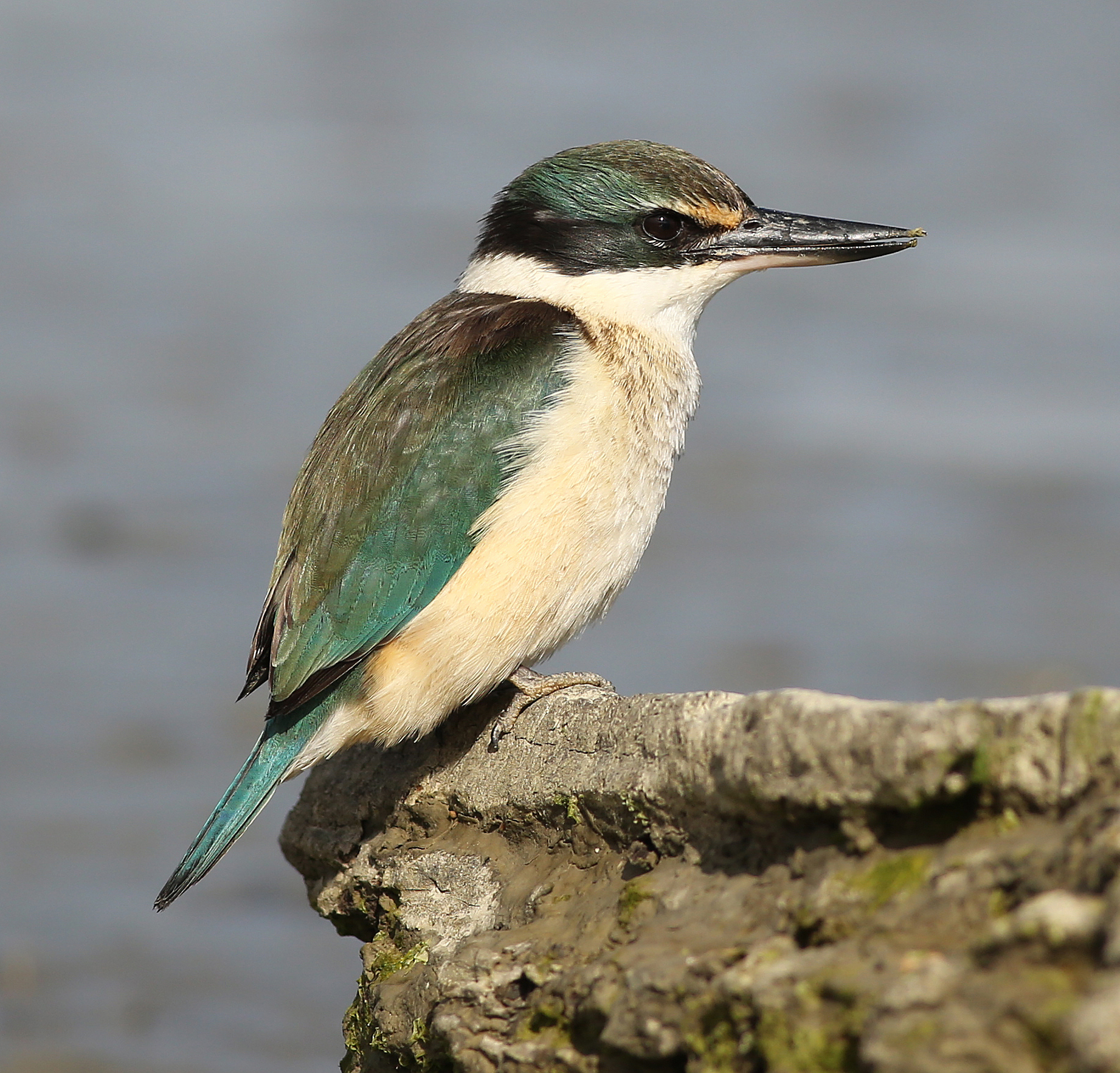
Kōtare (Kingfisher)
Kōtare (Sacred Kingfisher) is New Zealand’s only native kingfisher and is found throughout the country in coastal areas, forests, wetlands, and farmland.
It is instantly recognisable by its striking turquoise-blue back, rump, and tail, contrasting with buff-white underparts. Its loud, sharp “kek kek kek” call is often heard before the bird is seen.
Kōtare prefer open or semi-open habitats where they can hunt from elevated perches such as branches, fence posts, or banks overlooking water or open ground. They also require suitable nesting sites in soft earth, banks, or tree cavities.
They feed on a wide range of prey including insects, lizards, fish, small birds, and small mammals. Larger prey is often carried to a perch and beaten before being swallowed whole, with indigestible parts later regurgitated as pellets.
Kōtare excavate their own nesting burrows using their strong bill, chiselling tunnels into riverbanks, cliffs, or decaying trees. Pairs often return to the same nesting sites year after year.
Look for flashes of bright blue-green as they fly between perches, and listen for their sharp, repetitive calls along forest edges and waterways.
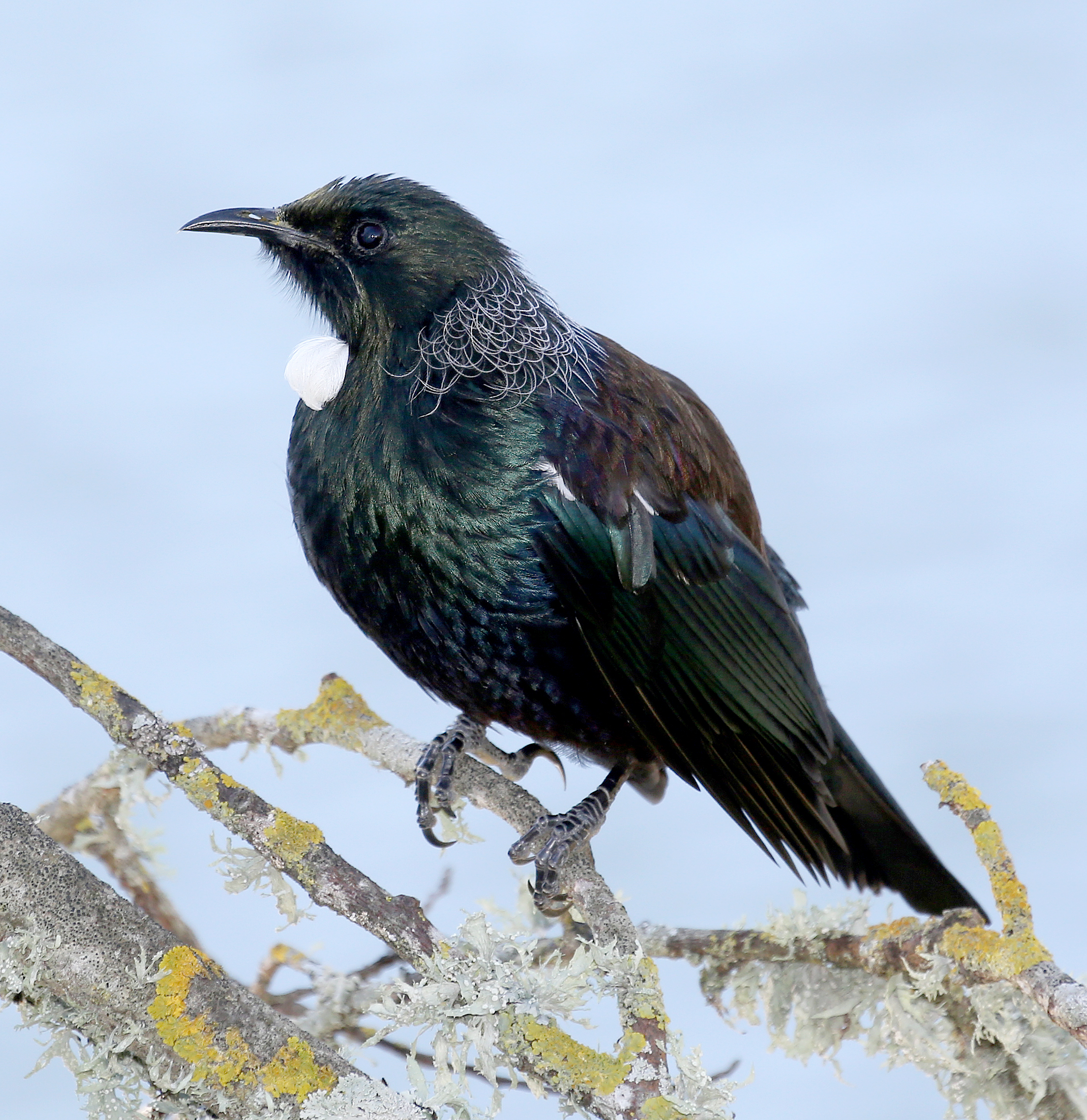
Tūī
Tūī are endemic to New Zealand and common throughout the Manawatū. From a distance they appear black, but in good light their feathers reveal an iridescent sheen of blue, green, and bronze, along with distinctive white throat tufts (poi).
Tūī are highly vocal honeyeaters with an extraordinary range of calls, from bell-like notes to clicks, cackles, groans, and wheezes. They are also skilled mimics and can imitate a wide range of sounds, including human speech. Their song can include frequencies beyond the range of human hearing.
In flight, tūī have a distinctive noisy, whirring wingbeat interspersed with short glides. Males are larger than females.
Tūī are bold and territorial, often chasing other birds from flowering trees while fluffing their feathers to appear larger and more intimidating.
They feed mainly on nectar and play an important role in pollinating native plants such as flax, kōwhai, and kaka beak. They also eat fruit, insects, pollen, and seeds.
Females build a bulky nest high in trees during spring and summer, where they incubate and brood the eggs. Both parents help feed the chicks as they grow.
Plants of Te Āpiti
Te Āpiti is home to precious native flora, from towering northern rātā and mature forest trees to delicate ferns and groundcover species. Among its botanical treasures is the giant maidenhair fern. This remarkable species is only found in the Manawatū region of New Zealand.
These plant communities form the foundation of Te Āpiti's unique ecosystem, providing food and shelter for native wildlife and helping to shape the character of the landscape. Ongoing conservation efforts help control invasive weeds and support forest regeneration, ensuring these living taonga can continue to thrive for generations to come.
Native Plants of Te Āpiti
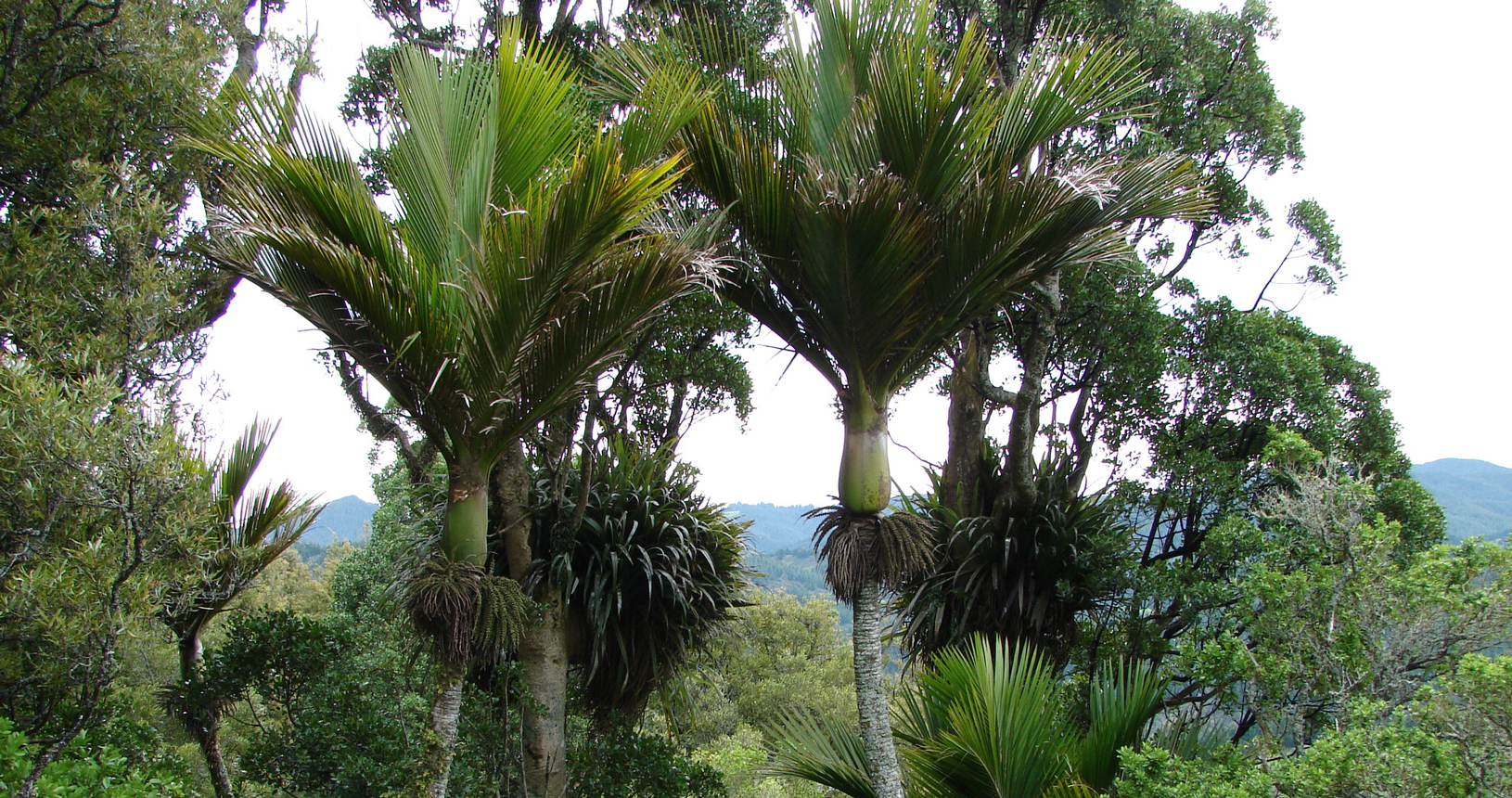
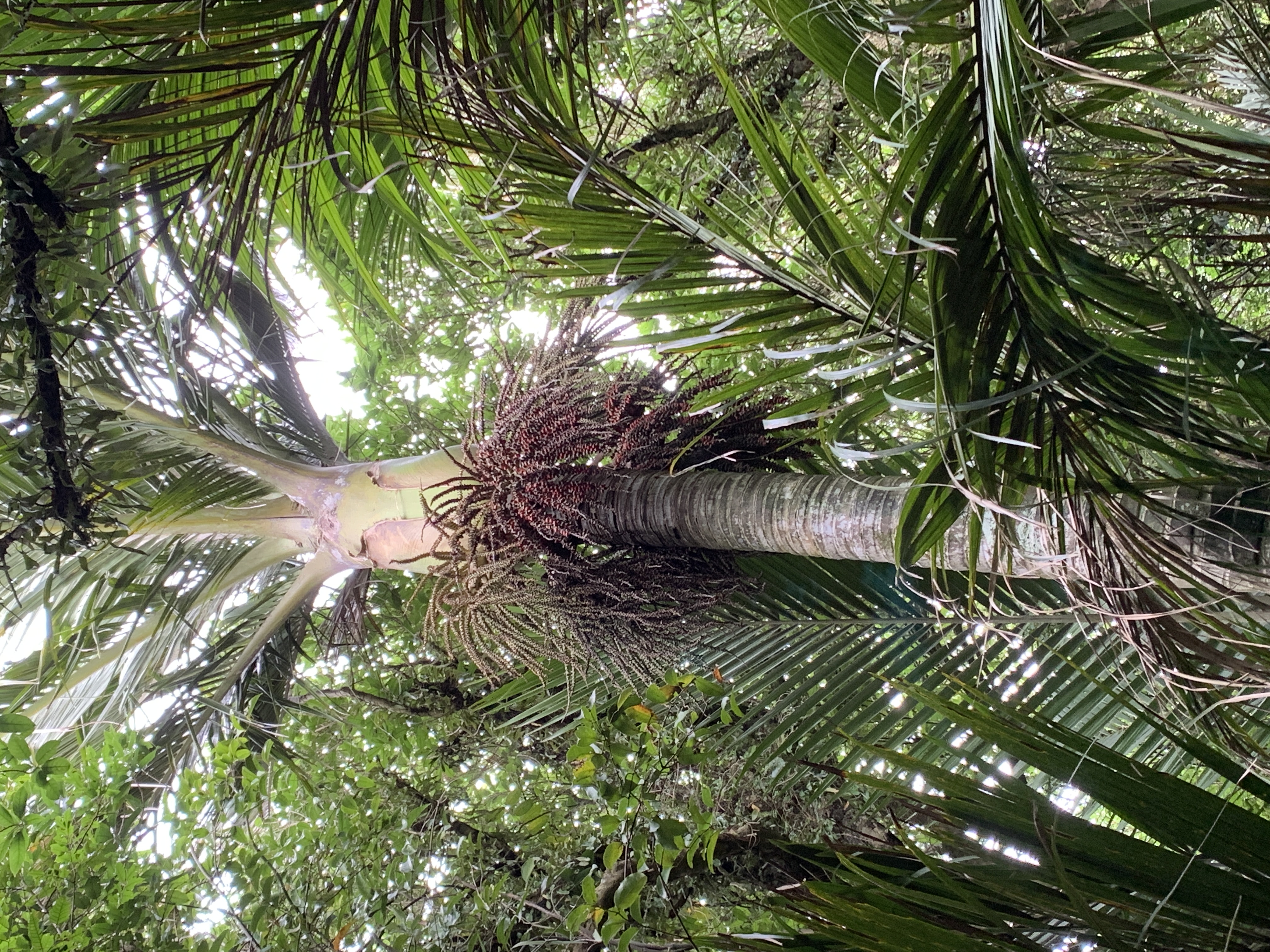
Nīkau
Nīkau (Rapalostylis sapida) is New Zealand's only native palm and the world's southernmost naturally occurring palm. It grows up to 15 metres tall, with a smooth green trunk marked by rings where old fronds have fallen. As the palm sheds only about two fronds each year, these leaf scars can provide a rough guide to its age.
Large sprays of fragrant mauve flowers emerge from beneath the crown throughout the year, attracting bees and other insects. The bright red fruits take almost a year to ripen and are an important food source for kererū and other native birds.
Nīkau was an important resource for Māori. Its leaves were used for thatching and weaving, while the trunk was fashioned into containers. The berries, flowers and young shoots were also eaten. However, harvesting the growing tip (the rito or "heart") kills the entire palm—giving rise to the nickname "millionaire's salad plant", because each serving costs a whole tree.
Traditionally, nīkau was also valued in Māori medicine, with parts of the plant used as a laxative and to help relax muscles during childbirth.
Tawa
Tawa (Beilschmiedia tawa) is a common canopy tree of New Zealand’s lowland forests, especially across the central North Island, where it often forms the dominant forest canopy. It can grow up to 30 metres tall with smooth, grey-brown trunks.
Small greenish-yellow flowers are followed by dark purple fruit, about 2.5–4 cm long, which ripen in late summer and autumn.
The fruit is an important food source for kererū, which swallow the fruit whole and disperse the seeds throughout the forest.
Tawa was also valued by Māori and early settlers, who used infusions of the aromatic bark as a warming drink and for treating stomach ailments and colds. The fruit itself was also eaten.
Look for its tall, straight trunks and smooth bark forming part of the shaded forest canopy.
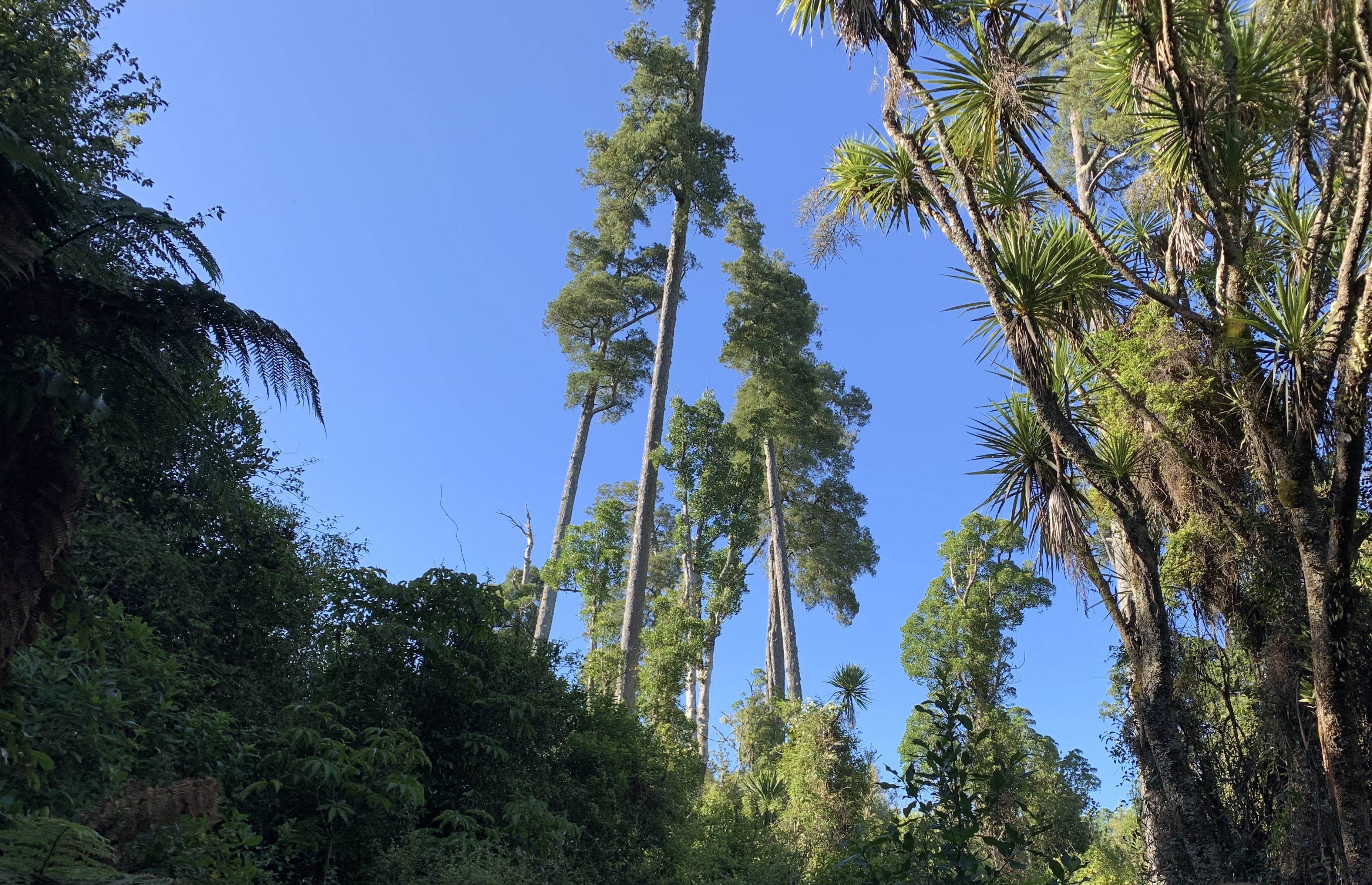
Kahikatea
Kahikatea (Dacrycarpus dacrydioides) is New Zealand’s tallest native tree and a characteristic species of lowland swamp forests. It once formed vast forest stands across wet floodplains, many of which have now been cleared.
It can grow over 60 metres tall, with a straight trunk and thin, grey bark. Mature trees often develop buttressed bases to help support them in soft, waterlogged soils.
Kahikatea produces small, fleshy berries that turn orange-red when ripe. These are an important food source for native birds, which help spread the seeds through the forest.
Look for its very tall, straight trunk rising above other trees, often in wet or low-lying forest areas.
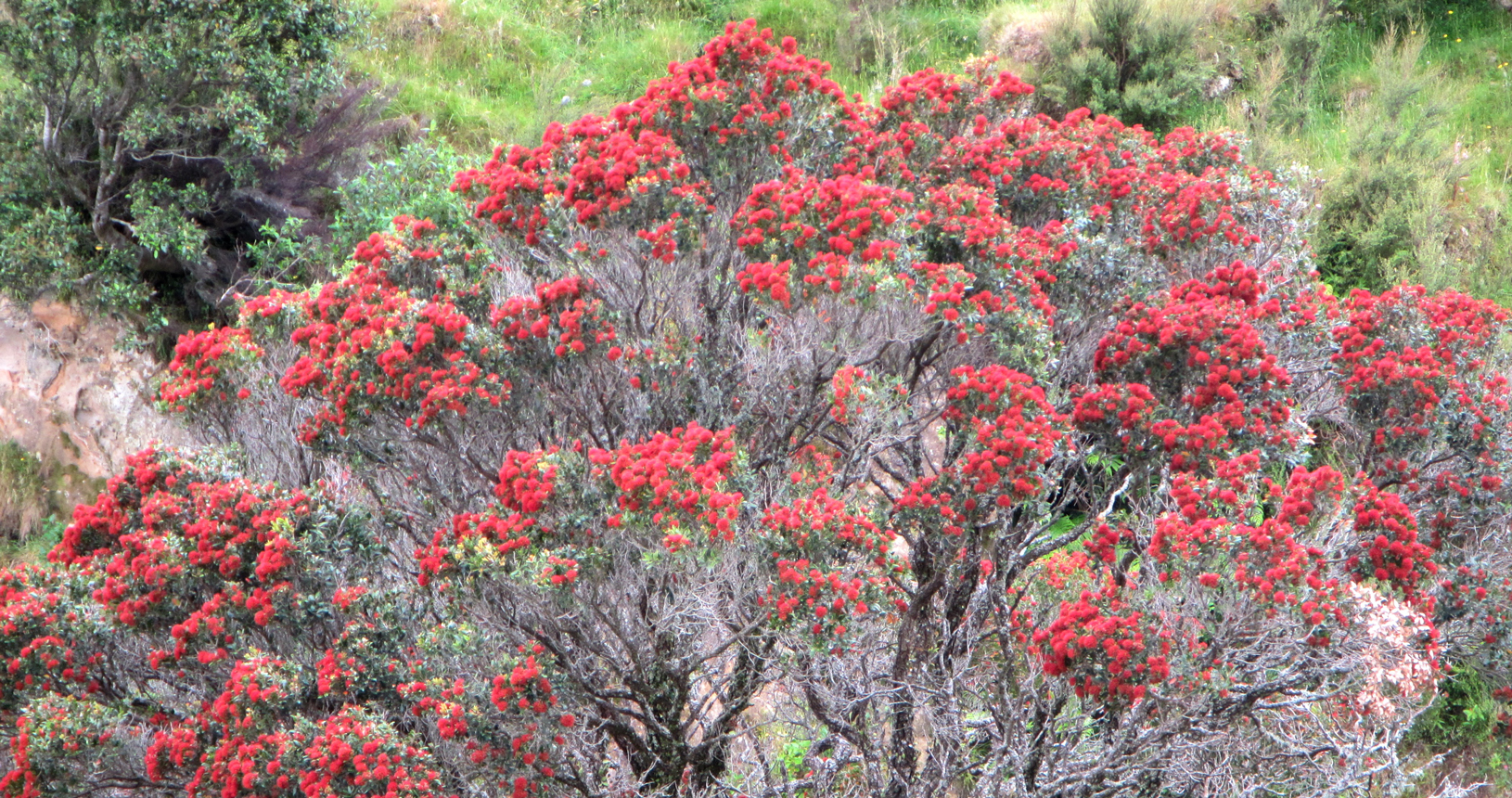
Northern Rātā
Northern rātā (Metrosideros robusta) is one of New Zealand's great forest giants, growing over 30 metres tall with trunks up to 2 metres across. Its scientific name, Metrosideros, means "iron-hearted", referring to its exceptionally hard timber. It is often mistaken for its coastal relative pōhutukawa, but northern rātā is a true forest tree and is far less common in coastal landscapes like the Horizons region.
It can be recognised by its thick, leathery, dark green leaves with a paler, silvery underside, and in late spring and early summer, its spectacular clusters of crimson flowers that can cover the entire canopy.
Unlike most trees, northern rātā usually begins life high in the branches of another tree. A tiny wind-blown seed germinates in a fork or hollow, then sends roots down the trunk to the forest floor. Over many decades these roots fuse together to form a massive trunk. Sometimes the original host tree eventually dies and decays, leaving a hollow centre within the rātā.
In late spring and early summer, the nectar-rich flowers attract native birds and insects. Tiny seeds are released from woody capsules and carried away by the wind.
Northern rātā is threatened by browsing common brushtail possum, which can kill even large trees by eating leaves, buds and flowers. It is also vulnerable to Myrtle rust.
Māori traditionally used the bark to treat wounds, bruises, aches and colds, while the sweet nectar was used to soothe sore throats.
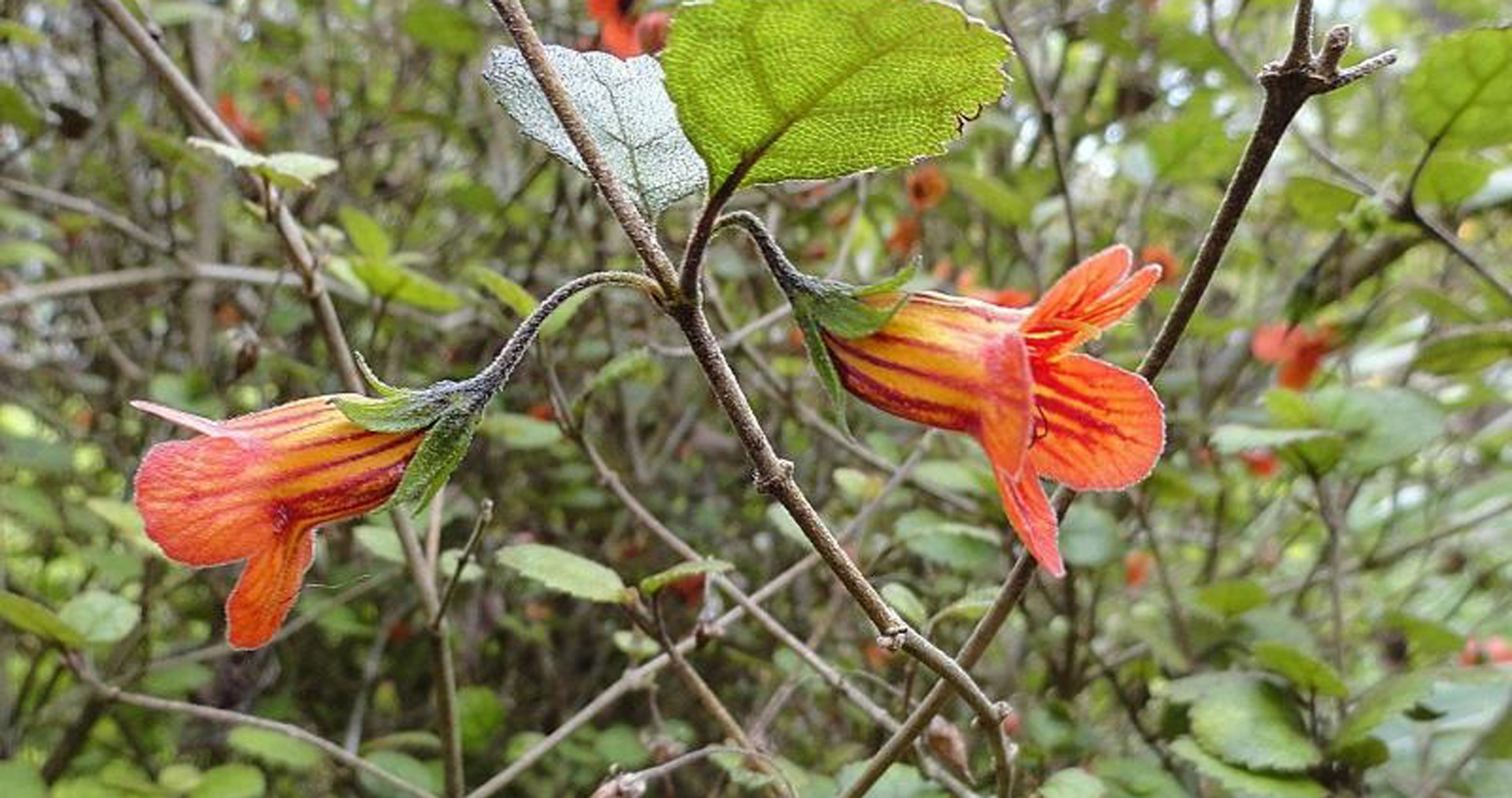
Taurepo (NZ Gloxinia)
Taurepo (Rhabdothamnus solandri) is New Zealand's only native member of the gloxinia family. This small, twiggy shrub grows up to 2 metres tall and is found in coastal and lowland forests, along streams, on steep banks, and in upland areas throughout the North Island.
Taurepo flowers all year, with its peak flowering season from October to February. Its small, brightly coloured, trumpet-shaped flowers range from brick red to orange, and occasionally pale yellow. They are adapted for bird pollination. Seed capsules develop a few weeks after flowering and are produced throughout the year.
Taurepo is thought to have evolved alongside native nectar-feeding birds such as hihi and bellbird, whose long beaks were well suited to pollinating its flowers. Today, silvereye often peck holes in the flower tubes to steal nectar. Although this bypasses the normal pollination process, they still transfer some pollen, helping to ensure the plant continues to reproduce.
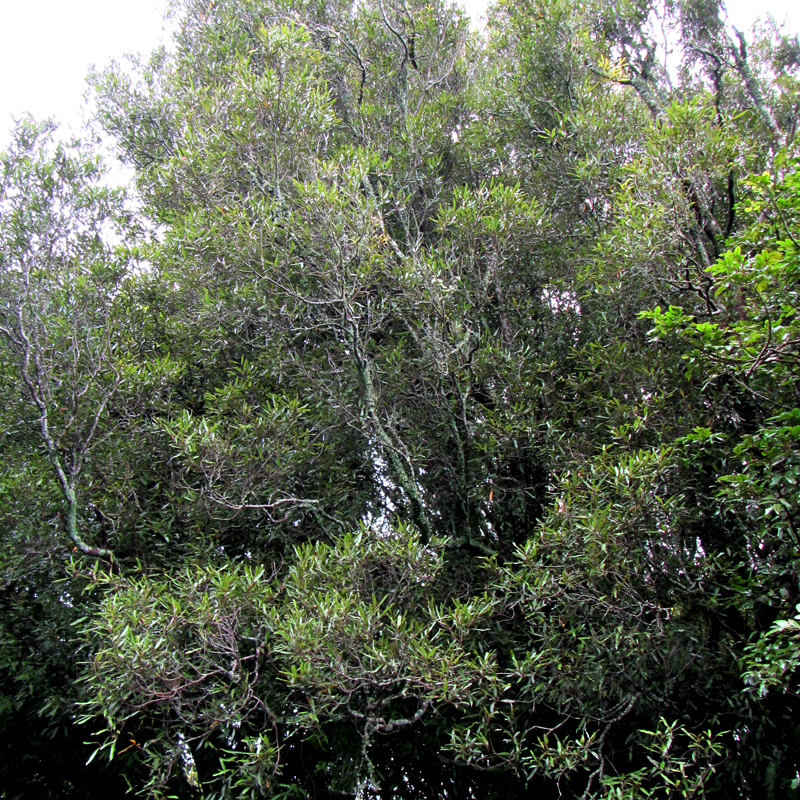
Ramarama
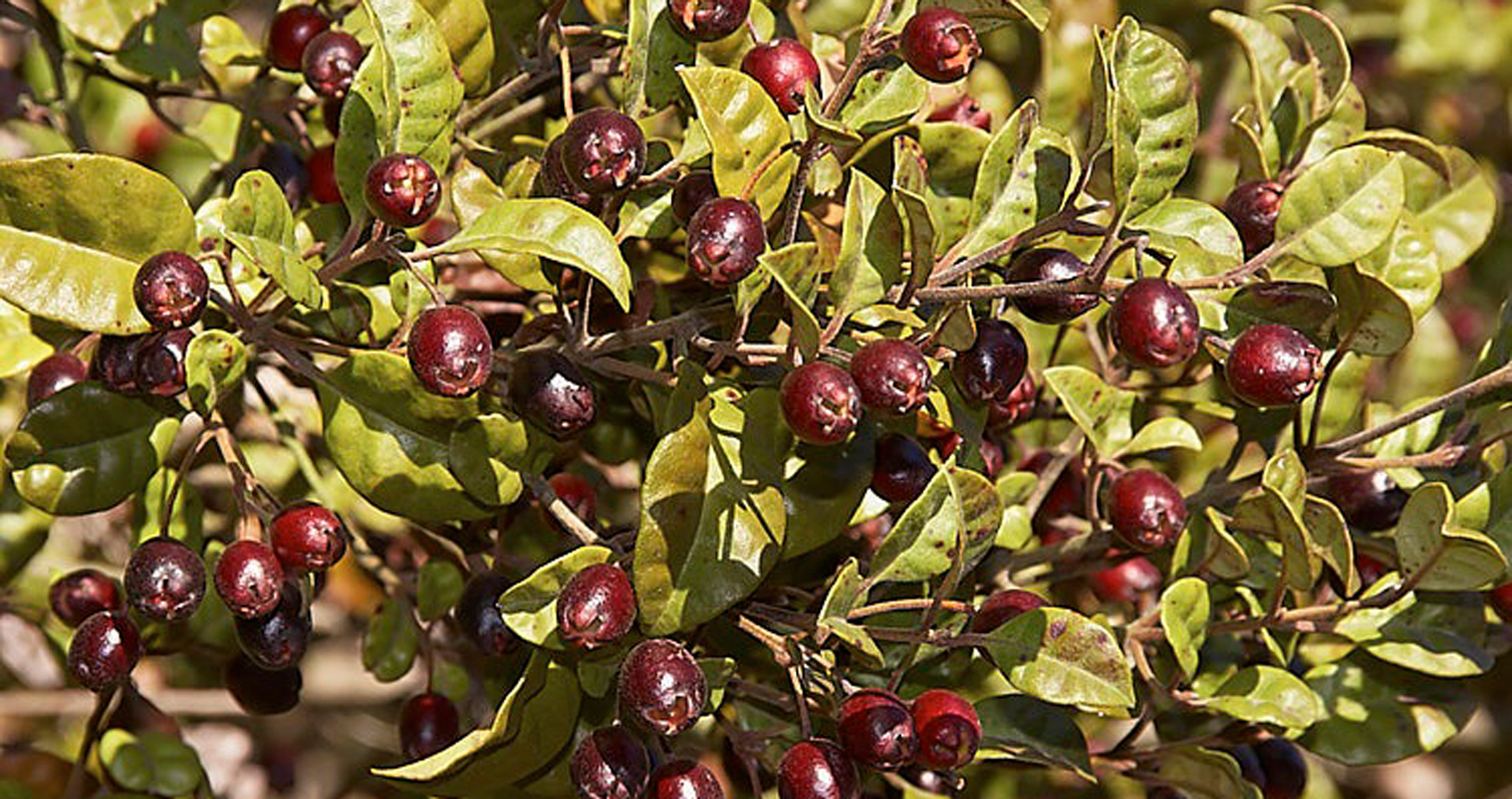
Ramarama (Lophomyrtus bullata) is an endemic New Zealand evergreen tree that grows up to 8 metres tall. Its scientific name, bullata, comes from the Latin word meaning "bubbled", referring to its distinctive blistered leaves.
It grows in coastal and lowland forests, forest margins, and along stream banks throughout much of the North and South Islands. Its thick, glossy leaves are dark to yellow-green and often marked with red, maroon or purple-black spots.
Small white to pale pink, cup-shaped flowers appear from November to March, followed by dark reddish-purple berries that ripen to black between January and June.
The ripe berries are edible and have a sweet flavour similar to guava. Māori traditionally used a leaf decoction to treat bruises, and the berries were used to add flavour when cooking fern root.
Unfortunately, ramarama is highly susceptible to Myrtle rust, a fungal disease that is spreading throughout New Zealand.
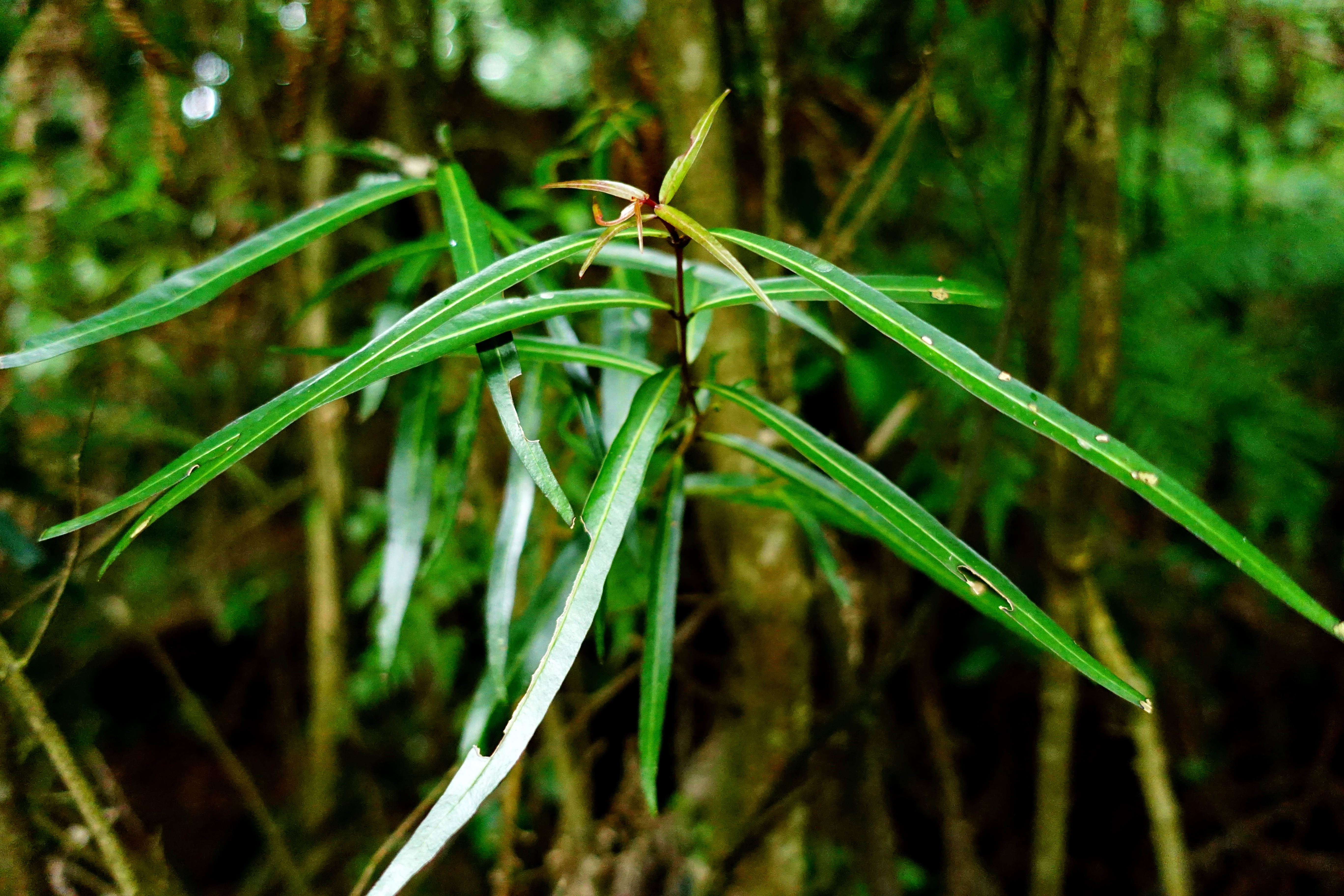
Maire taiki (NZ Sandalwood)
Maire taiki (Mida salicifolia) is an endemic New Zealand tree and the country's only native member of the sandalwood family. Unlike its fragrant overseas relatives, its wood has no scent. Instead, it has another remarkable feature – it is a root parasite, drawing water and nutrients from the roots of neighbouring trees while still producing its own food through photosynthesis.
Growing up to 6 metres tall, maire taiki is found in lowland and lower montane forests throughout the North Island. Clusters of small greenish, pink or red flowers are followed by bright scarlet, fleshy fruits from October to February.
Māori valued its exceptionally hard, durable wood for making weapons, digging sticks and carved walking sticks.
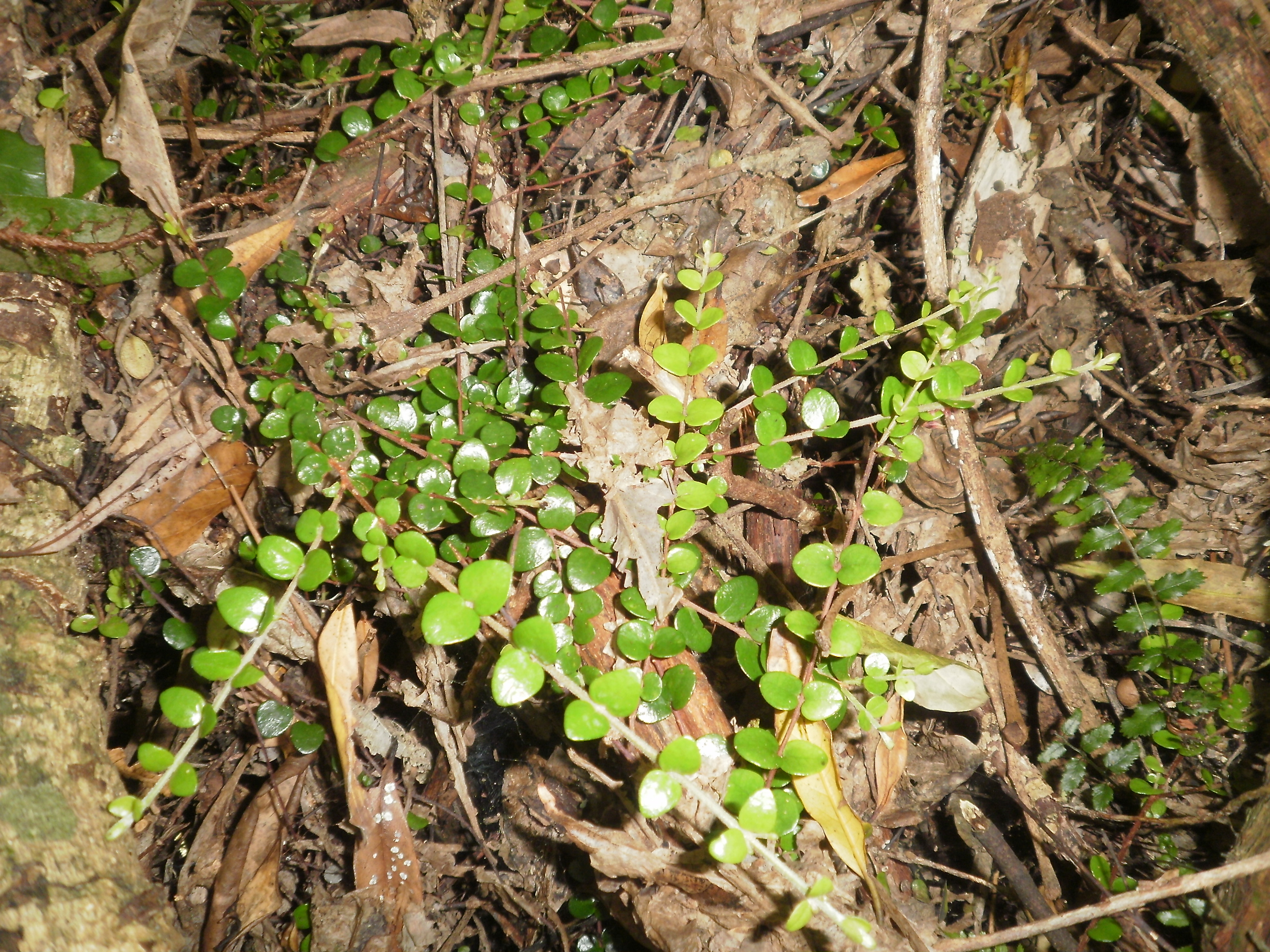
White rātā
White rātā (Metrosideros perforata) is a climbing native plant common in the Manawatū Gorge. Unlike the tall forest trees in the same family, it grows as a vine, using surrounding trees for support and reaching up to 20 metres into the canopy.
In summer it produces masses of small white flowers along its stems. Rich in nectar, these attract a wide range of visitors by day, including bees, butterflies, birds and geckos. At night, the flowers become especially attractive to native moths.
Its small rounded leaves are dotted with tiny oil glands, giving them a finely pitted or “perforated” appearance — a detail you can often see when light catches the foliage in the forest understory. This is what gives the plant its name, perforata.
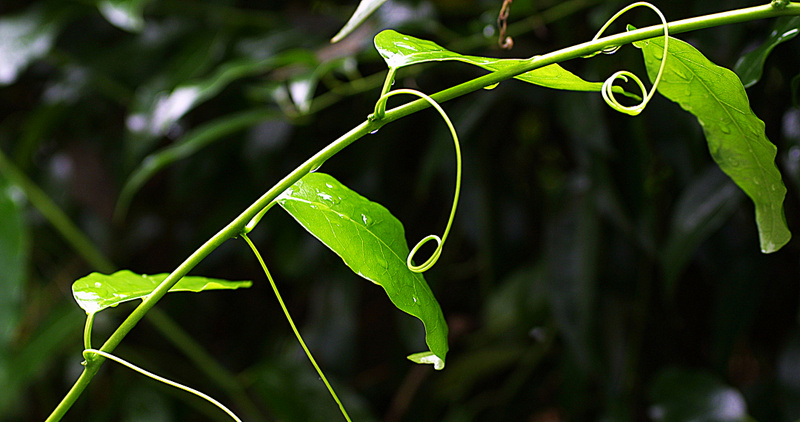
Kohia (NZ Passionfruit)
Kōhia (Passiflora tetrandra) is New Zealand’s only native passionfruit vine. It is found in lowland forests throughout much of the North Island and as far south as central South Island.
This vigorous climbing plant can develop thick, twisting stems that snake along the forest floor before reaching up into the forest canopy.
Small greenish-white flowers appear from mid-spring through summer. Male and female flowers occur on separate plants, and only female plants produce fruit.
The fruit is a striking bright orange capsule that splits open when ripe. Birds feed on the seeds and help spread them through the forest.
Look for its tangled, rope-like stems on the forest floor, and bright orange fruit hanging high in the canopy.
Tarawera (Button fern)
Button fern (Pellaea rotundifolia) is a small native fern found only in New Zealand, growing in scrub and forest margins. It is also a popular garden and indoor plant, valued for its neat, cascading form.
Its arching fronds are lined with small, rounded leaflets that give it a distinctive “button-like” appearance.
Unlike most plants, button fern has been found to produce a natural compound that is toxic to the larvae of common house flies.
Look for its soft, trailing green fronds forming tidy clumps in shaded or rocky places along forest edges.
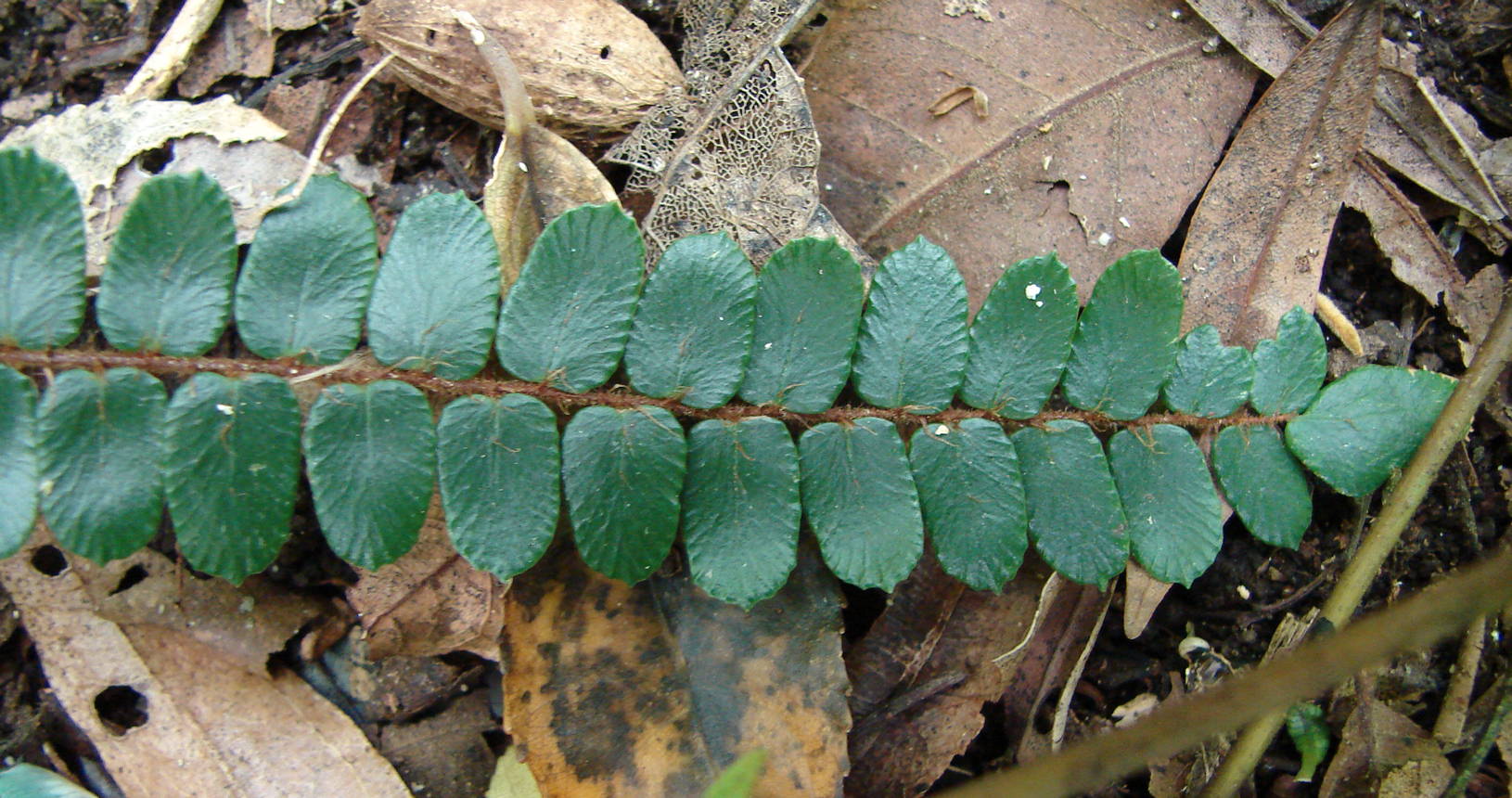
Giant Maidenhair fern
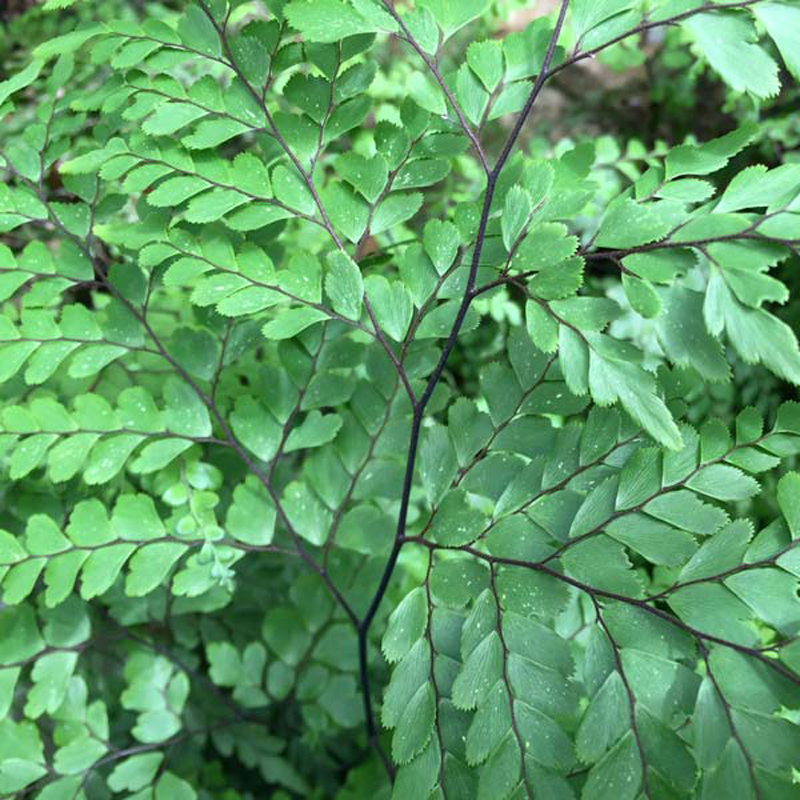
Giant maidenhair fern (Adiantum formosum) is one of New Zealand's rarest native ferns. Although common in eastern Australia, it is now extremely scarce in the wild here. The only known natural populations survive in the Manawatū Gorge and nearby Woodville area, making this region a nationally important refuge for the species.
It grows in moist, shaded places beside streams, usually on rich alluvial soils. Despite its delicate appearance, the fern can reach almost a metre tall. Its graceful, fan-shaped fronds are carried on distinctive, wiry black stems that contrast beautifully with the bright green foliage.
Like all ferns, the giant maidenhair does not produce flowers or seeds. Instead, it reproduces by releasing millions of microscopic spores from the undersides of its fronds.
What's that plant?
Free apps like Aotearoa Species Classifier and iNaturalist make plant identification a breeze.
Download to your phone from the Playstore and you'll be an expert in no time!